
24 de junio de 2026 | Guardián del río Chattahoochee (CRK) continúa investigando La mortandad de peces sin precedentes ocurrida entre el 20 y el 22 de mayo de 2026 en el río Chattahoochee, justo aguas abajo de Peachtree Creek en Atlanta, Georgia.
Durante una patrulla de rutina del río el viernes 22 de mayo, Jason Ulseth, director ejecutivo y responsable del programa Riverkeeper de CRK, descubrió miles de peces muertos aguas abajo de Peachtree Creek. Observó peces de diversos tamaños y especies atrapados en árboles caídos y madera a lo largo de las orillas, y flotando en el centro del río. Material orgánico negro cubría las orillas y se encontraba suspendido en la columna de agua. Inmediatamente contactamos con el Departamento de Gestión de Cuencas Hidrográficas (DWM) de la ciudad de Atlanta, cuyos miembros se unieron a nuestra patrulla en barco para observar las condiciones del río. En los días y semanas siguientes, CRK ha estado coordinando con la División de Recursos de Vida Silvestre (WRD) del Departamento de Recursos Naturales de Georgia, la División de Protección Ambiental (EPD) de Georgia, la Agencia de Protección Ambiental de los Estados Unidos (EPA) y el DWM para determinar la causa de la mortandad de peces.
Grabación de un seminario web informativo gratuito organizado por CRK el 4 de junio de 2026 en respuesta a la mortandad de peces.
Durante la hora pico del miércoles 20 de mayo, la región metropolitana de Atlanta, principalmente las áreas del centro y la zona céntrica, registró hasta tres pulgadas de lluvia en una hora. La autopista Downtown Connector (I-75/85) se inundó, dejando varios vehículos varados. Las aguas pluviales contaminadas desembocaron en el arroyo Peachtree y en el sistema de alcantarillado combinado de la ciudad.
En este momento, CRK cree que el bajo caudal del río debido a la sequía; los enormes flujos de aguas pluviales contaminadas provenientes de Peachtree Creek; un desbordamiento de aguas residuales y pluviales del sistema de alcantarillado combinado de la ciudad de Atlanta hacia Peachtree Creek; y descargas adicionales tratadas de las plantas de tratamiento de aguas residuales en el río Chattahoochee crearon las condiciones para la muerte de los peces.
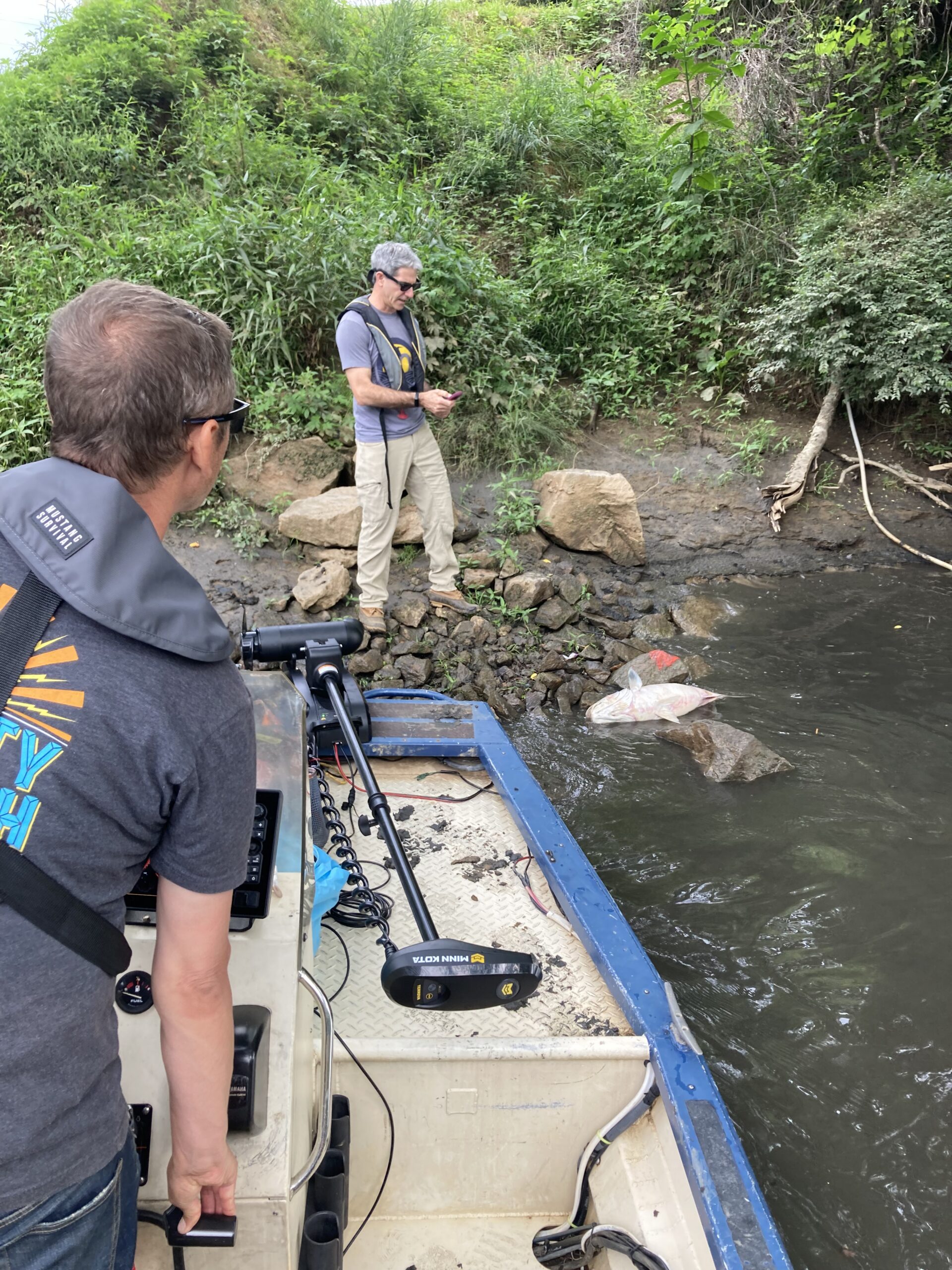
El sistema de alcantarillado de la ciudad de Atlanta está diseñado para soportar tormentas intensas, por lo que sabemos que las fallas operativas influyeron en el desbordamiento del túnel del Área Oeste. A medida que el cambio climático trae consigo más sequías y lluvias torrenciales a nuestra región, es probable que la ciudad deba ajustar sus operaciones de alcantarillado combinado. Esperamos colaborar con el Departamento de Gestión de Aguas de Atlanta (DWM) mientras investigan a fondo y trabajan para prevenir que un desastre como este vuelva a ocurrir.
– Jason Ulset
Guardián del río y director ejecutivo
Preguntas frecuentes
¿Qué pasó?
La investigación de CRK indica que una combinación de factores contribuyó a la muerte de los peces.
El túnel del área oeste de la ciudad de Atlanta, que forma parte del sistema de alcantarillado combinado, se desbordó en Peachtree Creek. Este desbordamiento de emergencia de agua sin tratar se mezcló con las aguas pluviales contaminadas de Peachtree Creek y luego llegó al río Chattahoochee. La ciudad de Atlanta ha indicado que no siguió todos sus procedimientos operativos estándar para la gestión del sistema de desbordamiento del alcantarillado combinado. Debido a la sequía, el río Chattahoochee tenía un caudal muy bajo, aproximadamente 750 pies cúbicos por segundo. El Cuerpo de Ingenieros del Ejército de los Estados Unidos, la entidad responsable de gestionar el caudal del río, solo mantenía caudales mínimos en esta confluencia crítica del curso de agua debido a la sequía.
Las importantes crecidas de aguas pluviales en Peachtree Creek arrastraron altos niveles de contaminantes. Tras impactar contra el pavimento en un día caluroso, la temperatura del agua pluvial habría sido superior a la temperatura habitual del arroyo. Además, debido a la falta de lluvia, las crecidas arrastraron una gran cantidad de contaminantes adicionales acumulados en las carreteras, que desembocaron en Peachtree Creek y el río Chattahoochee.
¿Cómo murió el pez?
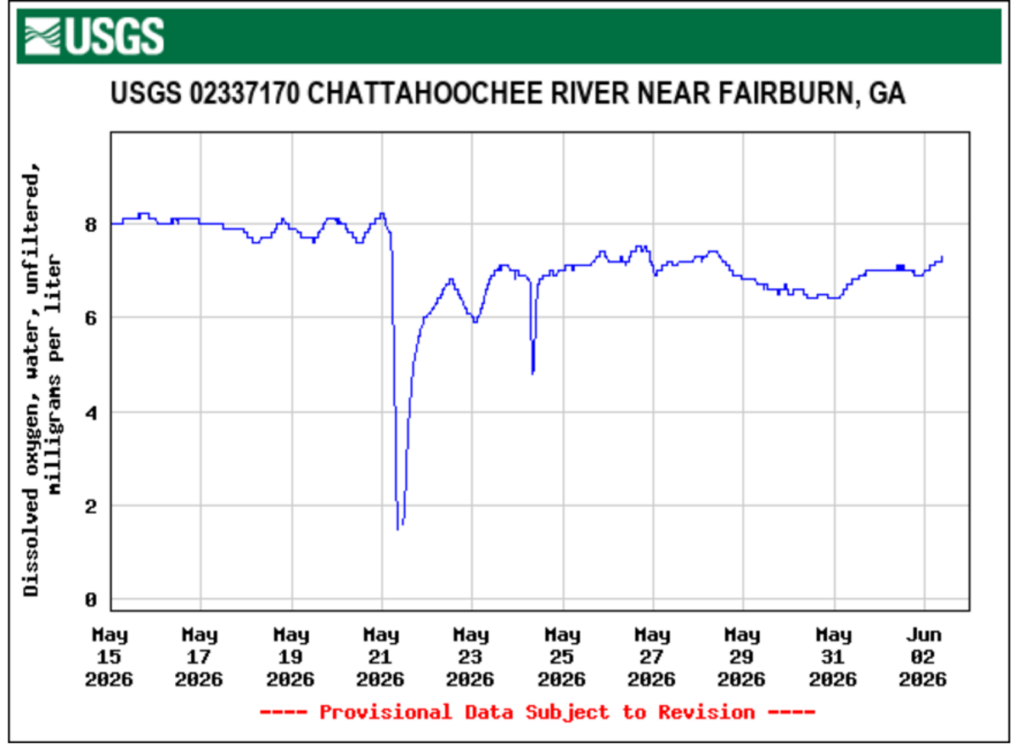
Los datos del Servicio Geológico de Estados Unidos (USGS) nos llevan a creer que los peces murieron el 20 de mayo. El USGS mantiene un medidor de monitoreo a 30 kilómetros río abajo de Peachtree Creek, en Fairburn Road, y los datos muestran que el oxígeno disuelto descendió por debajo de 2 mg/L en las horas posteriores a la tormenta. Los niveles de oxígeno disuelto en el río en Fairburn Road suelen estar entre 7 y 9 mg/L.
Los peces y demás vida acuática necesitan oxígeno del agua para sobrevivir. El agua caliente contiene menos oxígeno. Tras chocar contra el pavimento en un día cálido, la temperatura del agua de lluvia el 20 de mayo habría sido superior a la temperatura habitual del río. La mayor temperatura del agua, combinada con la entrada de agua clorada e hipóxica y materia orgánica procedente del Túnel del Área Oeste, probablemente provocó la drástica disminución del oxígeno que acabó con la vida de los peces.
¿Qué era esa sustancia negra que cubría las orillas del río y de dónde procedía?
CRK recogió muestras del material y espera los resultados de las pruebas de un laboratorio privado. Según los informes de los vecinos que observaron el desbordamiento del túnel, creemos que el material negro provino del interior del mismo.
¿Qué organismos participan en la respuesta?
El 2 de junio de 2026, CRK se reunió con representantes del Departamento de Gestión de Cuencas Hidrográficas (DWM) de la ciudad de Atlanta, la División de Protección Ambiental (EPD) de Georgia y la Agencia de Protección Ambiental (EPA) de los Estados Unidos. Los detalles de esa reunión, junto con una revisión de los permisos, los procedimientos operativos de la ciudad, los medidores de caudal y lluvia, los informes de la línea directa de CRK y otras evidencias, indican que una combinación de factores contribuyó a este suceso.
Departamento de Gestión de Cuencas Hidrográficas (DWM) de la ciudad de Atlanta Se están evaluando las operaciones internas y realizando pruebas de calidad del agua y sedimentos. La ciudad continúa presentando informes y evaluaciones al Departamento de Protección Ambiental (EPD). El Departamento de Gestión de Recursos Hídricos (DWM) se ha comprometido públicamente a contratar a una empresa de ingeniería externa para que realice una revisión exhaustiva del incidente, modifique los procedimientos operativos necesarios e implemente las mejoras tecnológicas pertinentes para garantizar que no se repita una mortandad de peces como esta.
Departamento de Recursos Naturales de Georgia (DNR) – Después de recopilar datos sobre la calidad del agua junto con el número, especies y tamaños de peces muertos el 22 de mayo de 2026, los investigadores de la División de Recursos de Vida Silvestre (WRD) de la agencia concluyeron en su informe que 44.509 peces murieron en un tramo de 16 millas del río y se les asignó un valor de $838.603,96. El DNR concluyó: “Dado el comunicado del [Departamento de Gestión de Cuencas Hidrográficas de la Ciudad de Atlanta], el relato de los testigos presenciales, la presencia de peces muertos dentro del tramo afectado del río, los datos recopilados en el medidor del USGS de Fairburn y las observaciones del personal de campo del WRD durante la investigación, el Departamento de Pesca del WRD puede concluir razonablemente que la muerte de los peces fue el resultado del desarrollo de condiciones hipóxicas en el río Chattahoochee después del vertido de aguas residuales del [Túnel del Área Oeste] el 20/05/26”. Según el conocimiento de CRK, esta es la mayor muerte de peces en Georgia desde el incidente del río Ogeechee en 2011, cuando murieron 38.000 peces en 77 millas con un valor de $125.000.
CRK prevé que el Departamento de Protección Ambiental de Georgia (EPD) multará a la ciudad de Atlanta por el valor de los peces muertos.
Agencia de Protección Ambiental de los Estados Unidos (EPA) – Supervisa el Decreto de Consentimiento de la Ciudad de Atlanta para su Sistema de Alcantarillado Combinado.
¿Qué tienen que ver la sequía y el cambio climático con este suceso?
En el momento de la mortandad de peces, la región sureste llevaba meses sufriendo una sequía con escasas precipitaciones. Los arroyos y el río Chattahoochee registraban niveles casi históricamente bajos. El 27 de abril, la División de Protección Ambiental de Georgia anunció Nivel 1 de respuesta a la sequía, por primera vez desde 2017.
Este suceso demuestra que el aumento de las temperaturas y los cambios en los patrones de precipitación debido al cambio climático, combinados con altos niveles de contaminación, infraestructuras saturadas y caudales insuficientes, sometieron al río a una presión tal que llegó al punto de romperse.
¿Tuvo este suceso algún impacto en el Área Recreativa Nacional del Río Chattahoochee?
Este evento no ocurrió dentro del Área Recreativa Nacional del Río Chattahoochee. Las lluvias posteriores y la contaminación difusa elevaron previsiblemente los niveles de E. coli en el río, sin relación con la mortandad de peces. Siempre tenga precaución al entrar en contacto con el río durante las 48 horas posteriores a la lluvia, cuando el río esté crecido y turbio. Puede consultar las estimaciones de bacterias en tiempo real en línea en bacterialert.org.
¿Tuvo este suceso algún impacto en el lago West Point?
Desde el 22 de mayo, CRK solo observó peces muertos en el tramo del río que va desde Peachtree Creek en Atlanta hasta la ciudad de Chattahoochee Hills. No observamos ningún impacto en la calidad del agua, los peces ni la fauna silvestre en el lago West Point ni río abajo en Columbus.
En los últimos dos años, CRK ha documentado múltiples incidentes que han puesto en peligro la salud y la seguridad pública y ambiental en el río Chattahoochee, aguas abajo de Peachtree Creek.
Las fallas en la infraestructura de la planta de tratamiento de aguas residuales de Big Creek del condado de Fulton (2023) y del centro de tratamiento de aguas residuales RM Clayton de la ciudad de Atlanta (2024) ejercieron una presión significativa sobre el río Chattahoochee. CRK presenció y reportó infracciones a la calidad del agua en ambos casos.
Durante décadas, CRK ha abogado constantemente por mayores caudales fluviales para garantizar la salud y la seguridad públicas aguas abajo. El aumento de las temperaturas, los cambios en los patrones de lluvia, la alta carga de contaminantes, la saturación de la infraestructura y los caudales mínimos insuficientes sometieron al río a una presión extrema, con una mortandad de peces sin precedentes como prueba de ello.
Artículos Relacionados
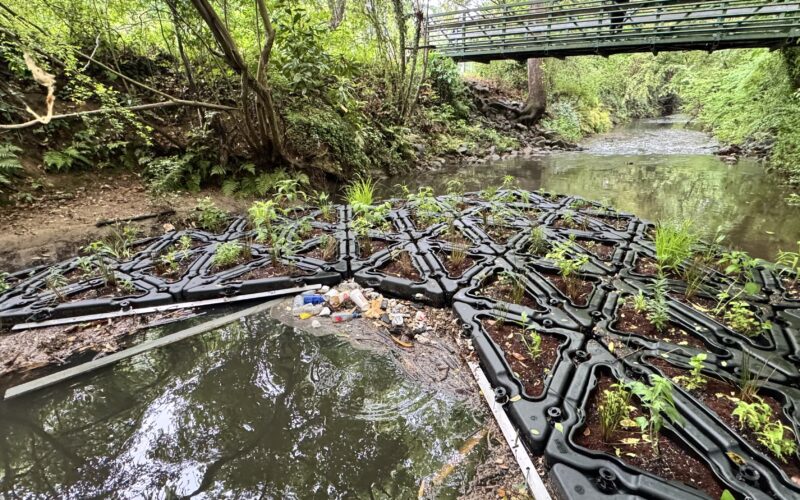
¿Qué es una trampa flotante para basura en humedales?
En honor al Día de la Tierra, Chattahoochee Riverkeeper se asoció con la ciudad de Chamblee y Cox Enterprises para instalar una "trampa flotante para basura de humedales" diseñada para capturar desechos y albergar especies nativas de humedales...
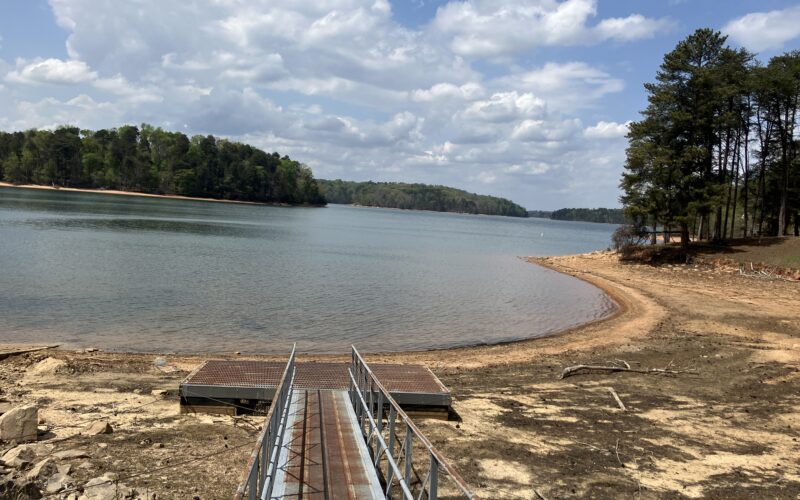
Conservación del agua durante la sequía
27 de abril de 2026 – La División de Protección Ambiental de Georgia ha declarado el Nivel 1 de Respuesta ante la Sequía. Haga clic aquí para obtener más información. Si su comunidad depende del río Chattahoochee, el lago Lanier u otra fuente de agua potable…
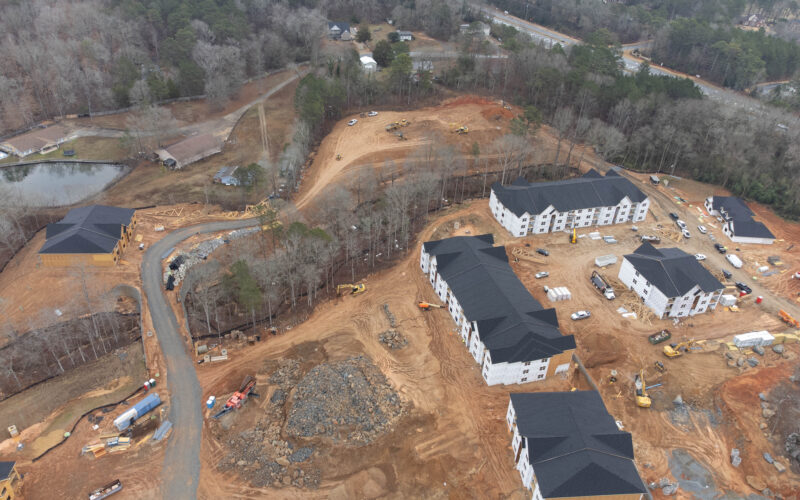
CRK envía un aviso de 60 días a una empresa constructora de Columbus.
Actualización: El 22 de mayo de 2026, Chattahoochee Riverkeeper, representada por Smith, Gambrell & Russell, LLP, presentó una demanda federal contra el propietario y el promotor de Aspire at Old Guard por…
 Spanish
  English