Las pruebas y el monitoreo son herramientas clave en nuestra administración continua de la calidad del agua y la salud pública.
Vigilancia del Agua del Vecindario
Neighborhood Water Watch (NWW) is a fast-paced community driven collaborative program between CRK and neighborhood groups, schools, and people in our watershed. The goal is to work together to assess and improve water quality in urban streams, while protecting human health in neighboring communities.
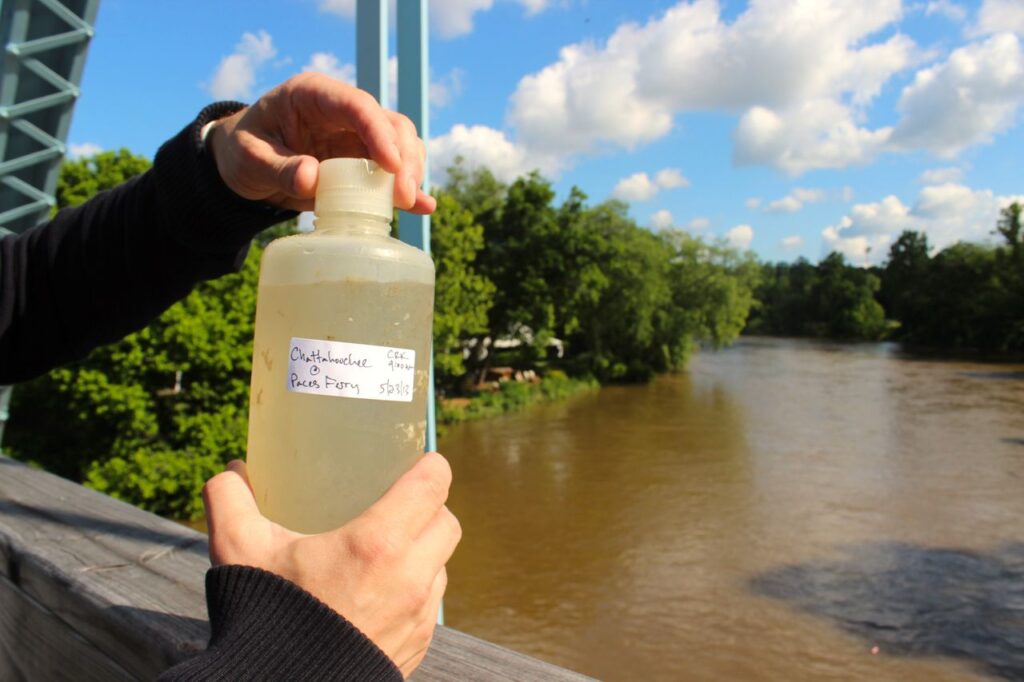
Residentes preocupados de todos los tramos de la cuenca del río Chattahoochee traen muestras de agua de más de 200 estaciones de arroyos a los laboratorios de CRK, como parte de NWW. Las muestras de agua se analizan rápidamente en busca de turbidez, conductividad, abrillantadores ópticos y E. coli. CRK aborda cualquier amenaza indicada, ya que trabajamos con los gobiernos locales, grupos de vecinos y líderes para detener las amenazas a la salud pública y restaurar nuestros arroyos.
Los datos de NWW también se cargan semanalmente en el Base de datos Adopt-A-Stream de Georgia. Hacer clic aquí para obtener más información sobre Georgia Adopt-A-Stream.
Para obtener más información sobre el programa Neighborhood Water Watch, eche un vistazo a nuestro descripción completa del programa. Si tiene alguna pregunta, incluso cómo puede participar, comuníquese con Mike Meyer, director del programa, al (404) 352-9828 o mmeyer@chattahoochee.org.
Recolectamos miles de muestras del río Chattahoochee y sus afluentes, en lugares que no son monitoreados de manera rutinaria por las agencias gubernamentales.
–Jess Sterling
Director de Programas Técnicos de CRK

Guía de natación
¿Es seguro nadar aquí? This is a question we often get at Chattahoochee Riverkeeper. During the summer recreation season, we publish a Swim Guide – a series of maps with red or green lights to help you decide if it is safe for primary contact recreation at popular swimming spots on the Chattahoochee River. Follow us on Facebook y Instagram for weekly updates during the summer.
Alerta Bacteria
La misión del programa BacteriAlert es recolectar muestras de agua en tres ubicaciones del río Chattahoochee en el Área recreativa nacional del río Chattahoochee (Medlock Bridge, Powers Ferry y Paces Ferry) para evaluar qué tan segura es el agua para nadar, vadear y navegar.
El programa es una asociación público-privada entre CRK, el Servicio Geológico de EE. UU. (USGS) y el Área Recreativa Nacional del Río Chattahoochee (CRNRA).
Los resultados se publican en la página web USGS BacteriAlert dentro de las 24 horas posteriores a la recopilación de datos. Usando fórmulas predictivas, el sitio web también proporciona estimaciones actuales de los niveles de bacterias E. coli en el río, según las condiciones de turbidez en tiempo real.
Monitoreo de oxígeno disuelto
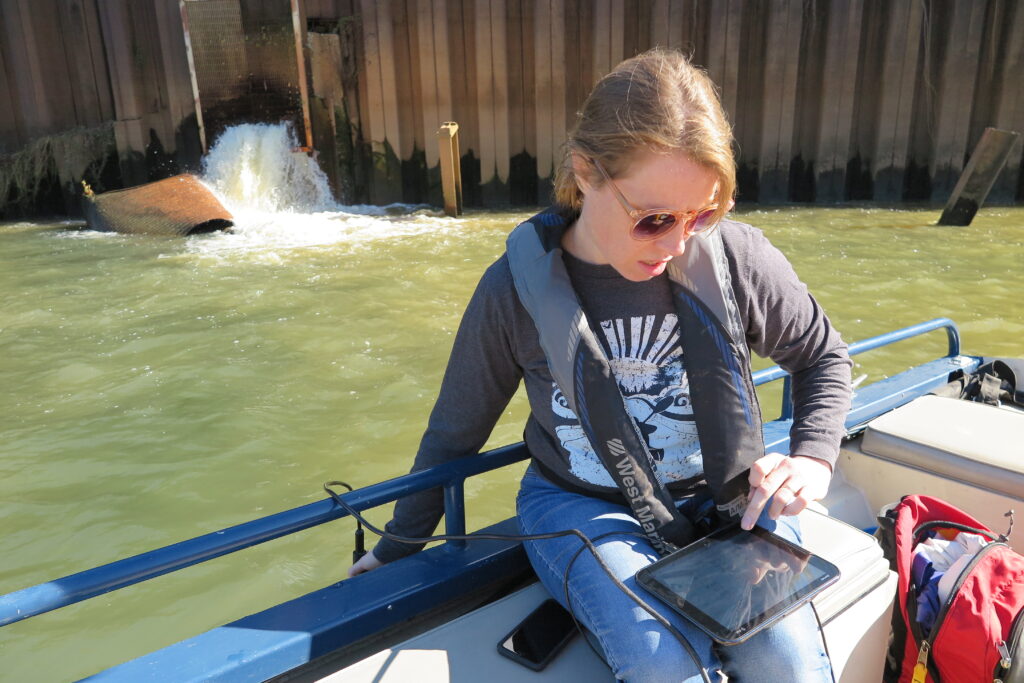
Desde 2008, en 15 ríos río abajo de Atlanta, CRK ha monitoreado los niveles de oxígeno disuelto, un indicador clave de la salud de un río. Esta iniciativa está impulsada por nuestra creciente preocupación de que los niveles bajos de agua en el verano, que pueden resultar en niveles bajos de oxígeno disuelto, puedan estar dañando el ecosistema del río y la calidad del agua, además de afectar la salud de las comunidades y la vida silvestre que dependen de él.
Lake Nutrient Monitoring
Nitrogen and phosphorus are nutrients that are essential in healthy freshwater lakes and rivers, but can cause major water quality problems when they are in excess from human sources. Some examples are:
- Runoff from agricultural and industrial areas
- Discharges from municipal and industrial wastewater treatment facilities
- Leachate from septic systems
- Runoff from lawn fertilizers, and more…
Higher concentrations of nutrients in lakes can drive excessive algae growth, which can impact drinking water supplies, result in harmful algal blooms (HABs), and harm aquatic life.
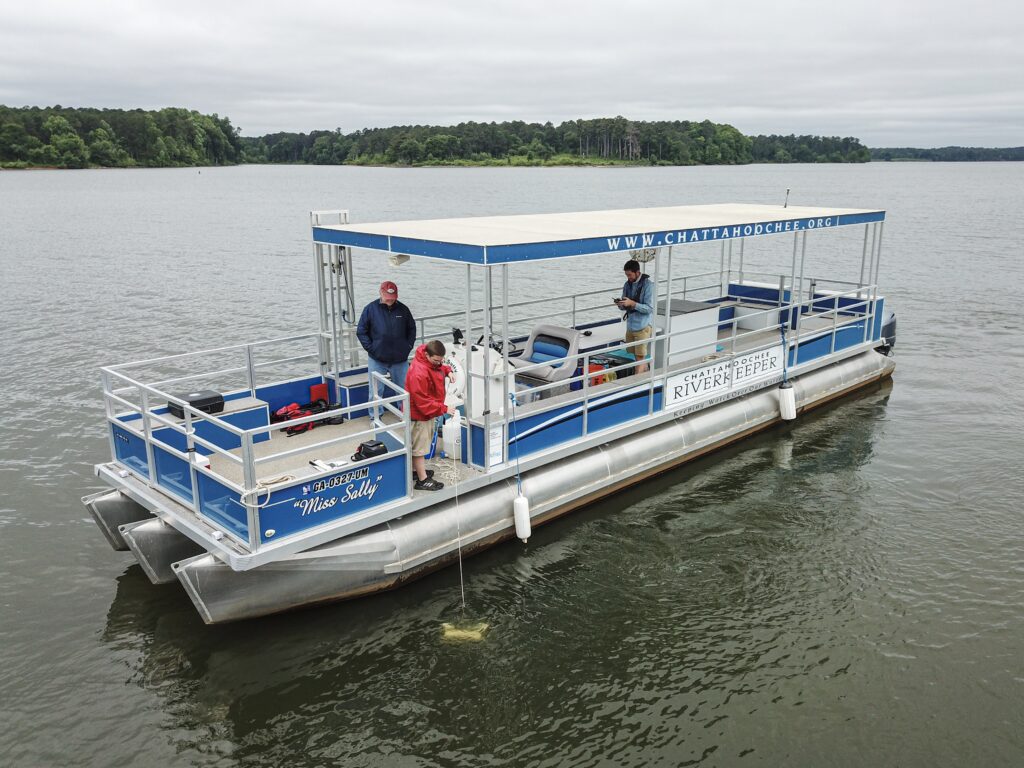
CRK conducts monthly monitoring of nutrient levels in Lake Lanier, West Point Lake, and Lake Walter F. George (Lake Eufaula) between April and October. Because our sampling and quality-assurance plans are approved by the Georgia Environmental Protection Division (EPD), our data is used by EPD and others to make important regulatory decisions.
Special thanks to Mincey Marble and the City of LaGrange for supporting this program.
CASSI
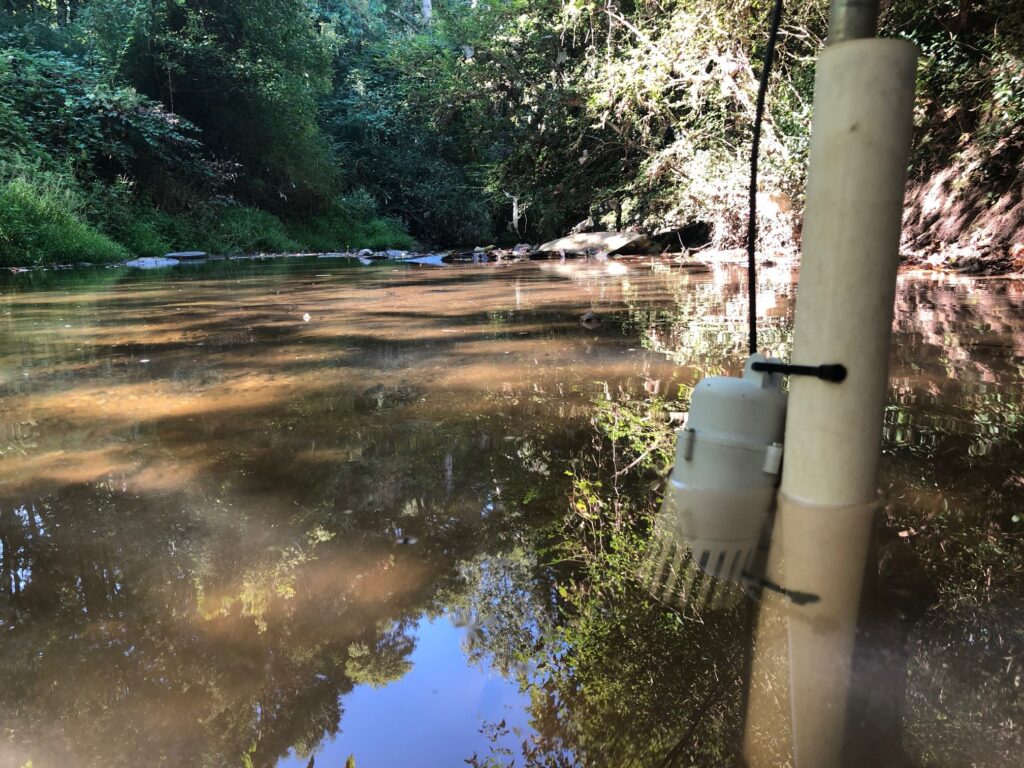
In 2018, we launched our Chattahoochee Aquatic Sensor System Integrated (CASSI) program to create a real-time water quality sensor using technology developed by the Stroud Water Research Center. We are deploying the devices (aka CASSIs) in streams and the river to detect conductivity, temperature and turbidity. Every 15 minutes, the CASSIs send the data over a cellular network to a web data portal that we monitor remotely.
We use the data to track urban water quality issues such as illicit discharges, stormwater discharge from construction projects, sewer overflows and to inform recreational river users about water quality on the Chattahoochee River.
PFAS
Also known as “forever chemicals,” PFAS (per- and polyfluoroalkyl substances) are a large group of chemicals that are resistant to heat, water, and oil. PFASs, including PFOA and PFOS, have been used to make carpets, clothing, fabrics for furniture, paper packaging for food, and other materials such as cookware, which are resistant to water, grease, or stains. They are also used for firefighting at airfields and in several industrial processes.
Because these chemicals have been used in many consumer products and they break down very slowly in the environment, most humans and ecosystems have been exposed to them at some point. CRK is monitoring surface water near industrial areas and municipal wastewater discharges to understand PFAS hotspots in the Chattahoochee watershed. In 2022 and 2024, CRK participated in a series of nationwide PFAS studies with Waterkeeper Alliance.
Microplastics
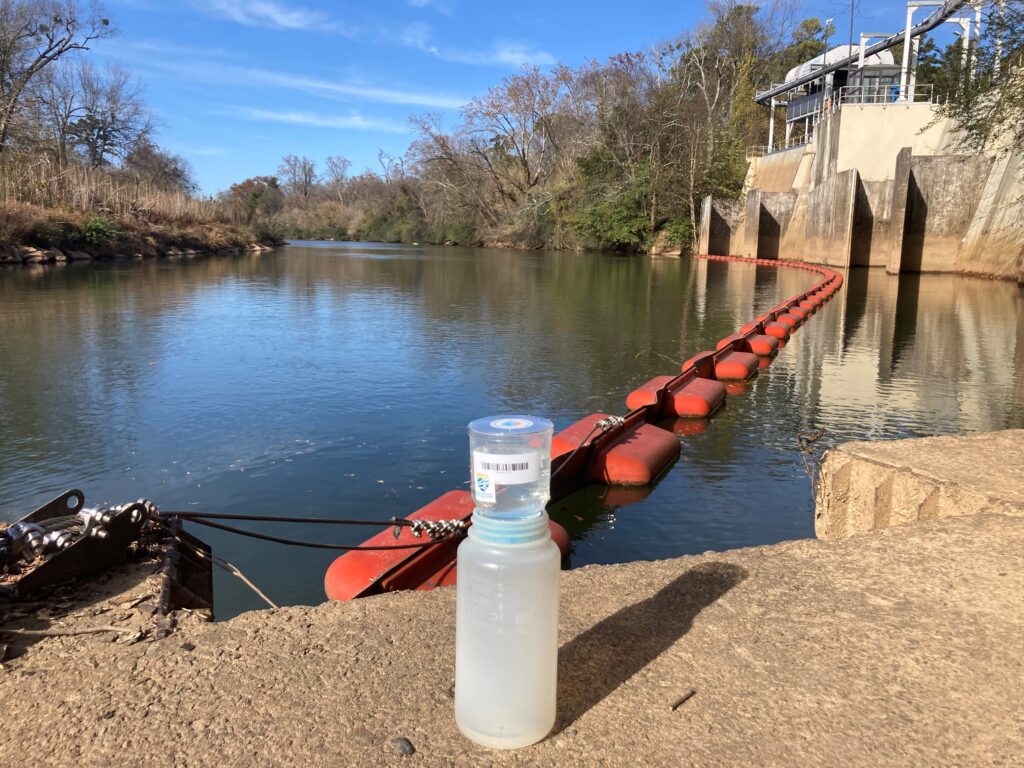
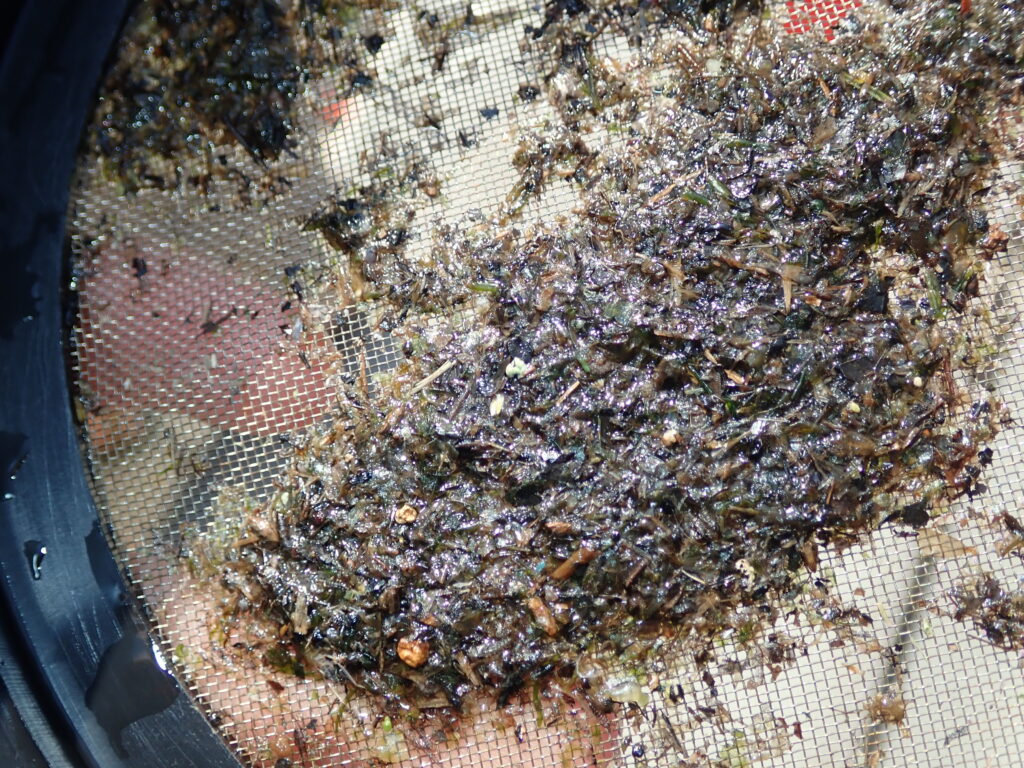
Microplastics are small pieces of plastic (less than 5 mm in size) that come from degraded trash in the water or through the wastewater treatment system. There has been much attention on microplastics in oceans, but there has been little research done on microplastic concentrations in freshwater rivers.
CRK is collaborating with researchers at Georgia State University to quantify concentrations of microplastics in the Chattahoochee River and urban tributaries.
Probablemente he tenido dos o tres problemas de contaminación en los lugares donde recojo el agua. Si no fuera por nosotros aquí haciendo esto... no sabríamos ni la mitad de lo que sucede en nuestros ríos y vías fluviales.
–Bryan Jenkins
Voluntario de Vigilancia del Agua del Vecindario
 Spanish
  English