
April 27, 2026 – The Georgia Environmental Protection Division has declared Drought Response Level 1. Click here for details.
If your community relies on the Chattahoochee River, Lake Lanier, or another source for drinking water in Georgia, it’s important for you to know that Georgia is experiencing drought.
There are some things to know if you plan on watering your lawn, washing your car, filling your pool, or buying a new appliance.
The top line message: please begin to think about how much water you use, where you use water, and how you use water. Our collective water-use behavior matters, particularly during a drought! Click here to view your water conservation to-do list.
Regardless of where you live, the City of Gainesville, Cobb Water, the Gwinnett County Water Resources Department, and the Metropolitan North Georgia Water Planning District have helpful water conservation suggestions, rebate offers to save money, and more so that you can be water wise and make every drop count!
Current Conditions
Georgia’s dry conditions have been building for months, particularly in southwest Georgia. Now, some measure of drought — categorized between “abnormally dry” and “exceptional drought” — covers 100 percent of the state, according to the U.S. Drought Monitor.
For those who may not know, Georgia experienced the most recent droughts “of record” from 2006-09 and 2010-12. In both instances, a lack of rain and high temperatures dried out the ground. Streams flowed at their lowest levels since the previous drought of record in the 1950s. In the first drought period, local governments restricted when residents could water lawns, mostly in northern Georgia. Sixty-one counties had to reduce their water use by 10 percent. And the Governor prayed for rain on the Capitol’s steps. In the second event, agriculture in southern Georgia was hit particularly hard. You can read more about “Drought in the ACF River Basin” here.
In April (2026), the Georgia Environmental Protection Division observed that stream flows in the Chattahoochee and Flint River basins — for example, near Cornelia and Dahlonega and in Upatoi Creek — are all currently lower than those flows were in March of 2007 and 2011. Lake Lanier’s reservoir—which combined with the Chattahoochee River supplies metropolitan Atlanta with 70 percent of its drinking water — is currently at a lower level than it was in 2007.
The Outlook
No significant rainfall is expected for the next weeks. And the most recent three-month outlook indicates some relief could be possible from May through July. However, air temperature will rise as we move into May and the summer months. If rain is slow, steady and persists over a few days, then we could see some recovery. However, a lack of significant rain and higher temperatures will draw more moisture out of the soil. Lakes and reservoirs will also begin to lose water to evaporation. On the hottest, cloudless summer days, lakes and reservoirs can lose as much as 1 million gallons of water per acre of reservoir each year. At Lake Lanier, that could equal an average of 100 million gallons of water per day.
Who declares “drought”?
The Georgia Environmental Protection Division (EPD) monitors drought conditions statewide and releases monthly “Drought Indictor Reports.” In consultation with local governments and water providers, EPD can issue a “Drought Declaration” and initiate targeted “Drought Response Strategies” in specific counties, regions, or the entire state.
On April 27, 2026, EPD Declared a Level 1 Drought Response. Level 1 is designed to make people aware that we are in a drought and does not change your ability to use water. Under Level 1, community residents can continue to water outdoors between 4 pm and 10 am as the law currently states. Level 1 requires local governments and water utilities to implement a public awareness campaign.
Drought Level 2 and 3 Responses are designed to address more challenging conditions and require higher levels of response from local communities and individuals to ensure water supplies are protected and available for public use. You can read all the Rules and Regulations for Drought Management here.
What You Can Do
Be water smart! According to state law, Georgians may water their lawns between 4 pm and 10 am at any time of the year, except during a Georgia Environmental Protection Division (EPD) declared Drought Response. When drought conditions are present, EPD may implement a Drought Response Level 1, 2, or 3. These response actions have not been implemented since 2019.
Your Water Conservation To-Do List:
Contact your drinking water provider to see if they offer rebates for new toilets or leak detection technology or offer other water saving kits.
Indoors:
- Fix ‘running’ toilets and leaky faucets
- Replace your toilet with a more efficient one
- Wash laundry and dishes only when you have a full load
- Save water with WaterSense products
Outdoors:
- Avoid new plantings or use drought tolerant plants
- Mulch to retain soil moisture
- Use drip irrigation instead of sprinklers
- Reduce outdoor watering and only water at specified times
- Avoid pressure washing
Saving Energy Saves Water Too!
- Install a programmable thermostat
- Update light fixtures with CFL or LED bulbs
- Save energy with ENERGY STAR (and water efficient) products
Related Posts
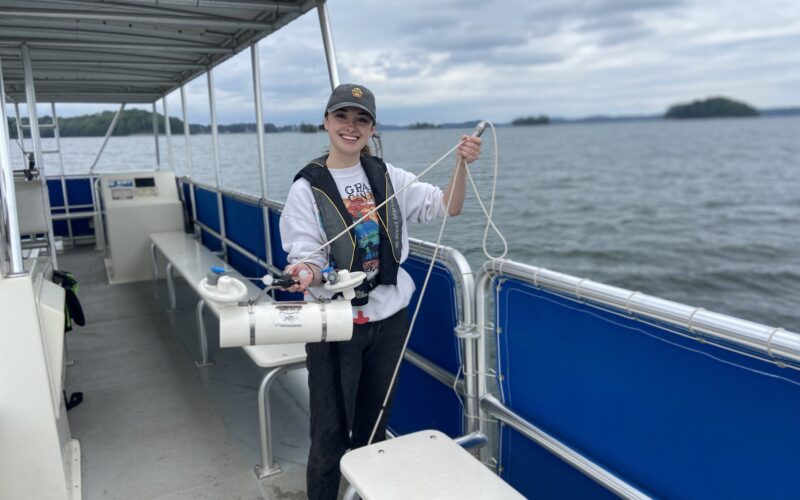
New reports of musty drinking water in Lake Lanier, metro Atlanta communities
Do you live in Metro Atlanta or around Lake Lanier? Have you noticed that your tap water tastes musty or like dirt? Drinking water providers around north Georgia that draw…
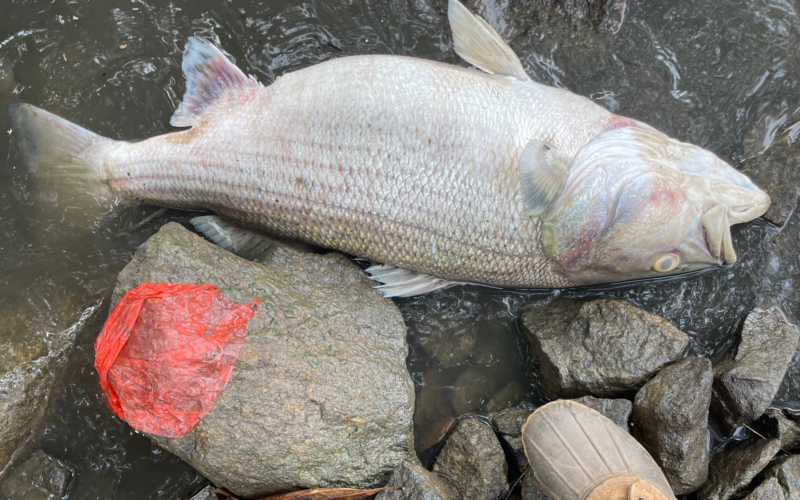
Investigation of Atlanta fish kill continues
June 24, 2026 | Chattahoochee Riverkeeper (CRK) continues to investigate the unprecedented May 20-22, 2026 fish kill on the Chattahoochee River directly downstream of Peachtree Creek in Atlanta, Georgia. During a routine patrol of the…
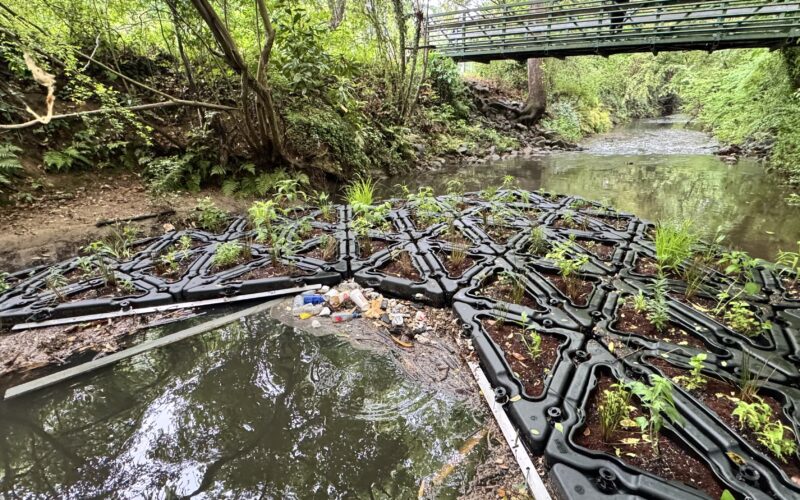
What is a floating wetland trash trap?
In honor of Earth Day, Chattahoochee Riverkeeper partnered with the City of Chamblee and Cox Enterprises to install a “floating wetland trash trap” designed to capture litter, host native wetland…
 English
  Spanish